A Digital Twin for the Calich Lagoon: the technological frontier of the CADIT project by NeMeA Sistemi
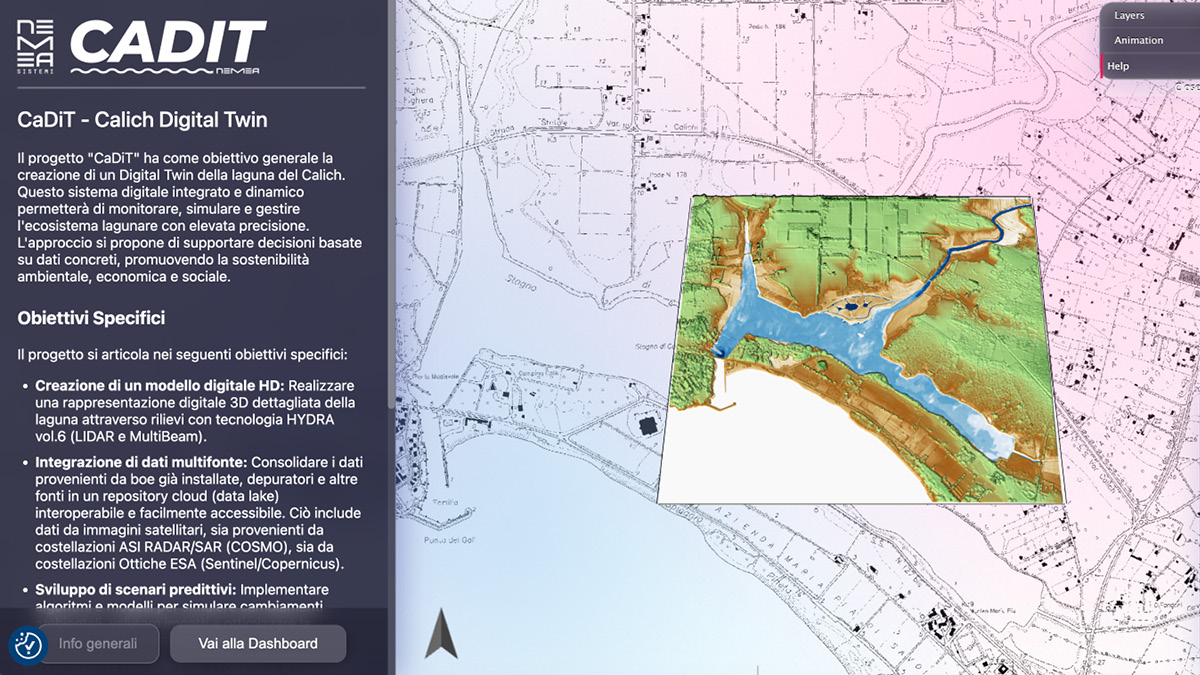
Against the backdrop of today’s complex climate challenges, the protection of biodiversity requires a paradigm shift: moving from mere observation to predictive capability. It is at this intersection between scientific knowledge and practical application that the CaDiT (Calich Digital Twin) project, an initiative by NeMeA Sistemi that redefines the boundaries of environmental monitoring through the creation of the Digital Twin of the Calich Lagoon.
The project is intended to serve as a strategic pillar for the protection of marine and coastal ecosystems – Funded by the European Union through the NextGenerationEU programme and incorporated into the National Recovery and Resilience Plan (PNRR), – CaDiT operates within the context of the National Biodiversity Future Centre (NBFC), within an institutional framework that recognises its excellence at a national level, thereby raising the Digital Twin technology standards for the protection of natural capital.
The physiology of the Digital Twin: how CaDiT works
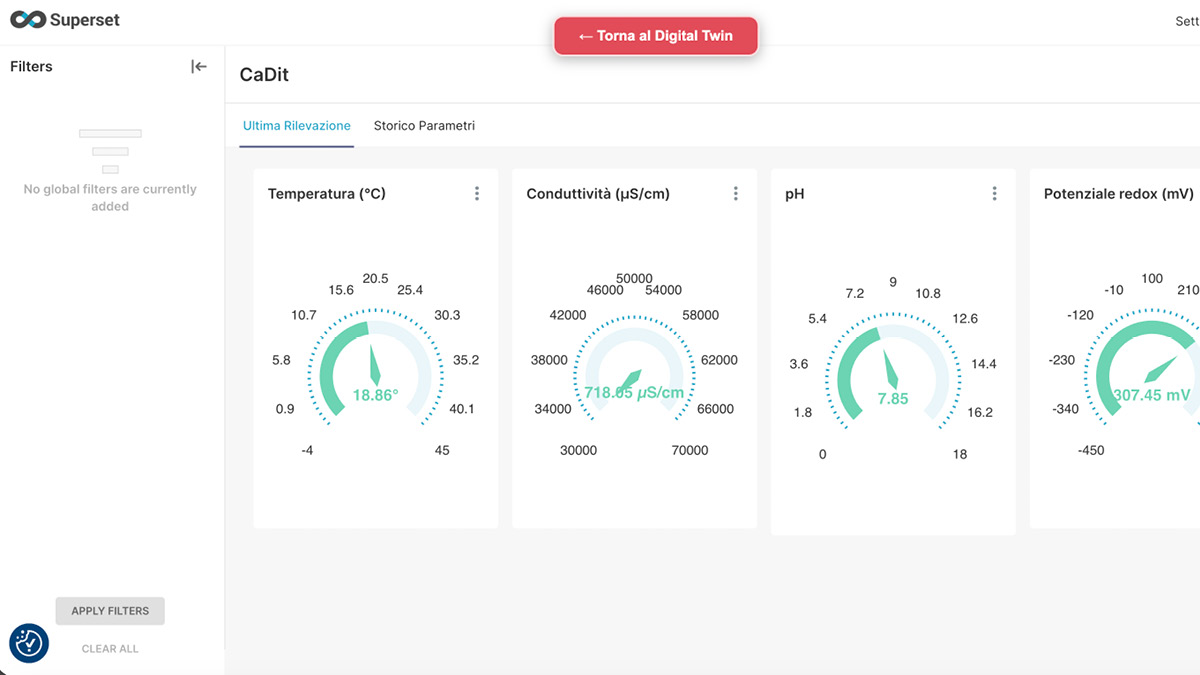
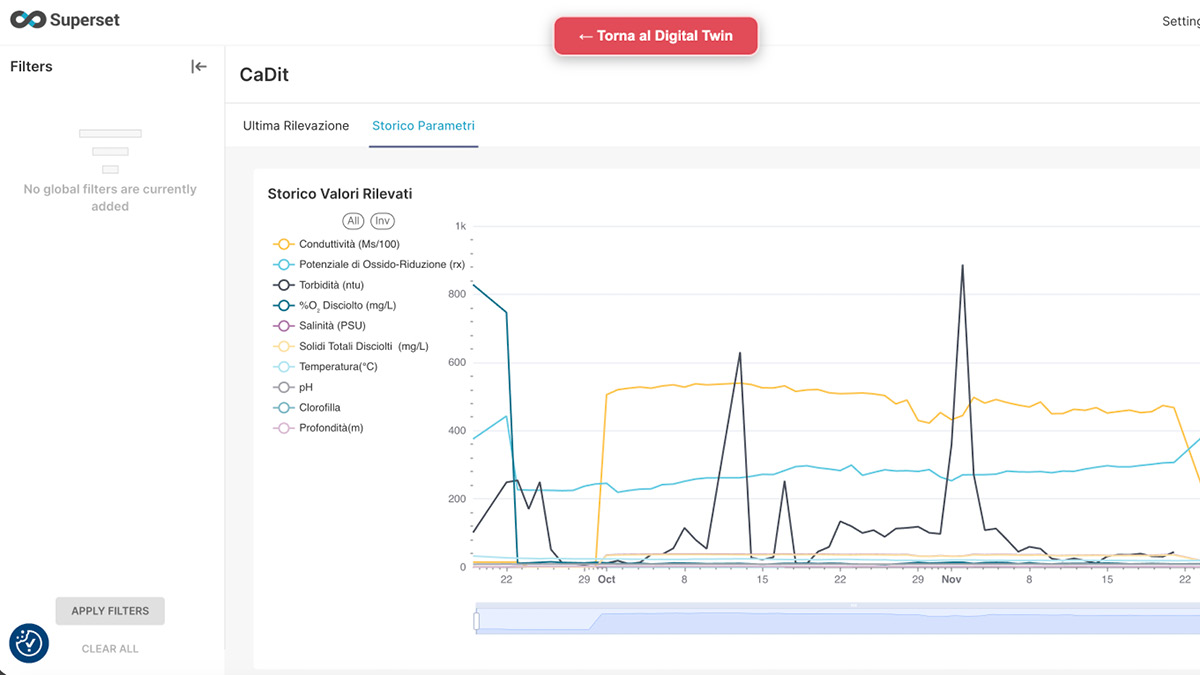
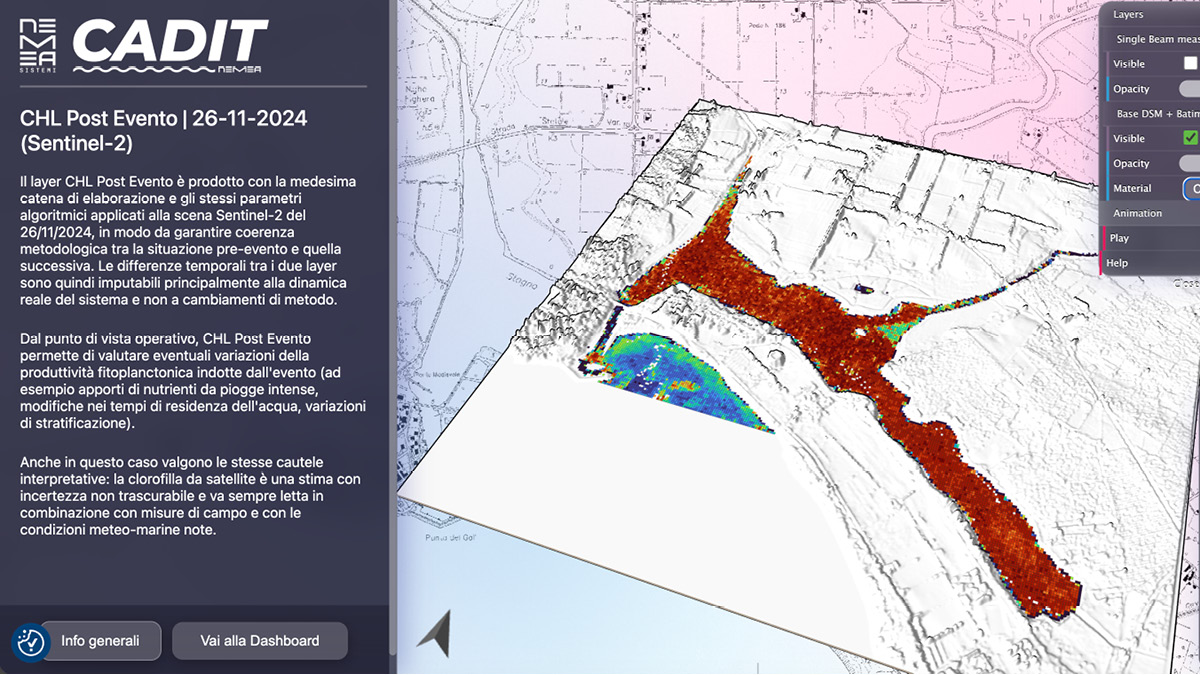
But what makes a Digital Twin so revolutionary? It is a high-fidelity virtual replica that ‘breathes’ in sync with the physical ecosystem. Unlike static 3D modelling, the CaDiT system is powered by a constant stream of information from a variety of sources:
- Smart buoys and self-cleaning sensors for chemical and physical sampling;
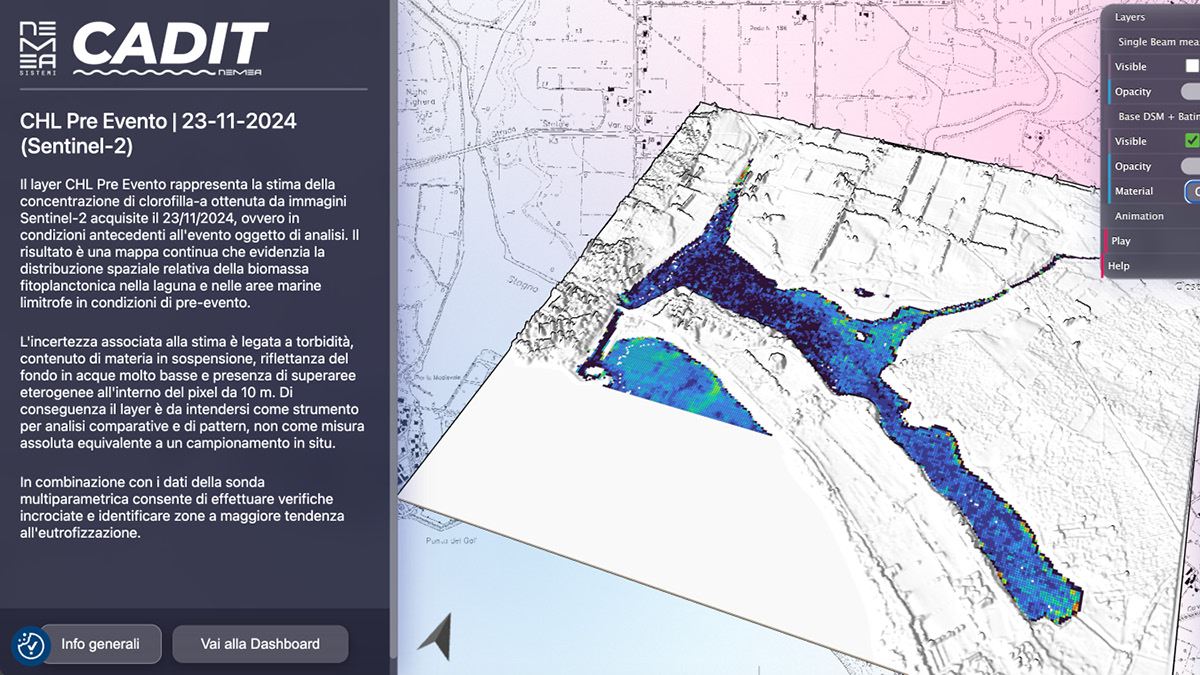
- Monitoring systems and satellite imagery advanced techniques for macroscopic observation;
- Sophisticated algorithms which process data to simulate future scenarios.
The heart of innovation lies in moving beyond data collection as an end in itself. The challenge that NeMeA has successfully met is to transform spatial data into information that can be immediately put to use. Whilst a traditional database merely captures a snapshot of the present, the CaDiT system generates a dynamic governance tool: it gathers complex data, makes it accessible and translates it into strategic decisions. Without this ability to ‘translate’ the data, it would remain useless; thanks to CaDiT, it becomes the scientific basis for timely and effective environmental policies.
The case study: the Calich Lagoon as a model of resilience
The effectiveness of this architecture is demonstrated in the Calich Lagoon, Sardinia. In this fragile ecosystem, the collaboration between NeMeA and the Porto Conte Regional Nature Park and the Capo Caccia – Isola Piana Marine Protected Area It has made it possible to tackle critical issues that would otherwise be difficult to manage, such as the proliferation of macroalgae or the impact of alien species. The Calich Digital Twin is therefore not just a map, but a virtual operations centre for the sustainable management and active protection of the wetland.
National recognition: from Rome to the future
The strength of this vision was recently celebrated in Rome, during theEvent: “Connecting Biodiversity – Nature Meets Innovation” (14–15 January 2026), in the prestigious setting of the Salone delle Colonne. The event, organised by NBFC, highlighted how subsidised finance is a key driver for accelerating change. During the ‘Inspiring Talks’ session, a fundamental concept was reiterated: the nature conservation Today, this is only possible through close collaboration between scientific research, institutions and innovative businesses.
Through the CaDiT project, ‘NeMeA Sistemi’ does more than simply observe biodiversity; it creates a global model of how innovation can give nature a voice once again.