September in the spirit of sustainable innovation: NeMeA Sistemi between RemTech Expo and BEX 2026
From Ferrara to Rimini, two key events have demonstrated how data, digital technologies, robotics and Earth observation can contribute to the environmental protection and to the responsible resource management.
September drew to a close with two major events dedicated totechnological innovation for sustainability and the green transition. NeMeA Sistemi took part in RemTech Expo, which took place from 16 to 18 September in Ferrara, and at the BEX – Beyond Exploration Expo, taking place from 23 to 25 September at the Rimini Expo Centre. Two events that differ in terms of their identity and areas of application, but are united by a common vision: tackling environmental challenges requires reliable scientific knowledge, high-quality data and tools capable of transforming information into timely and informed decisions.
The return to action after the summer break has thus turned into a journey through Environment, Territory and the Space Economy, during which NeMeA presented its multidisciplinary approach, based on the integration of satellite data, GIS systems, artificial intelligence, robotics and environmental monitoring.
RemTech Expo: innovation and expertise for the regeneration of local areas
The first stop was RemTech Expo, the Environmental Technology Hub specialising in the remediation, regeneration and sustainable development of local areas. The 2026 edition brought together institutions, businesses, universities, research centres and professionals in Ferrara, providing a forum for discussion on the key issues of the ecological transition: from the remediation of contaminated sites to resource management, from the prevention of hydrogeological instability to coastal protection, right through to the circular economy and Earth observation.
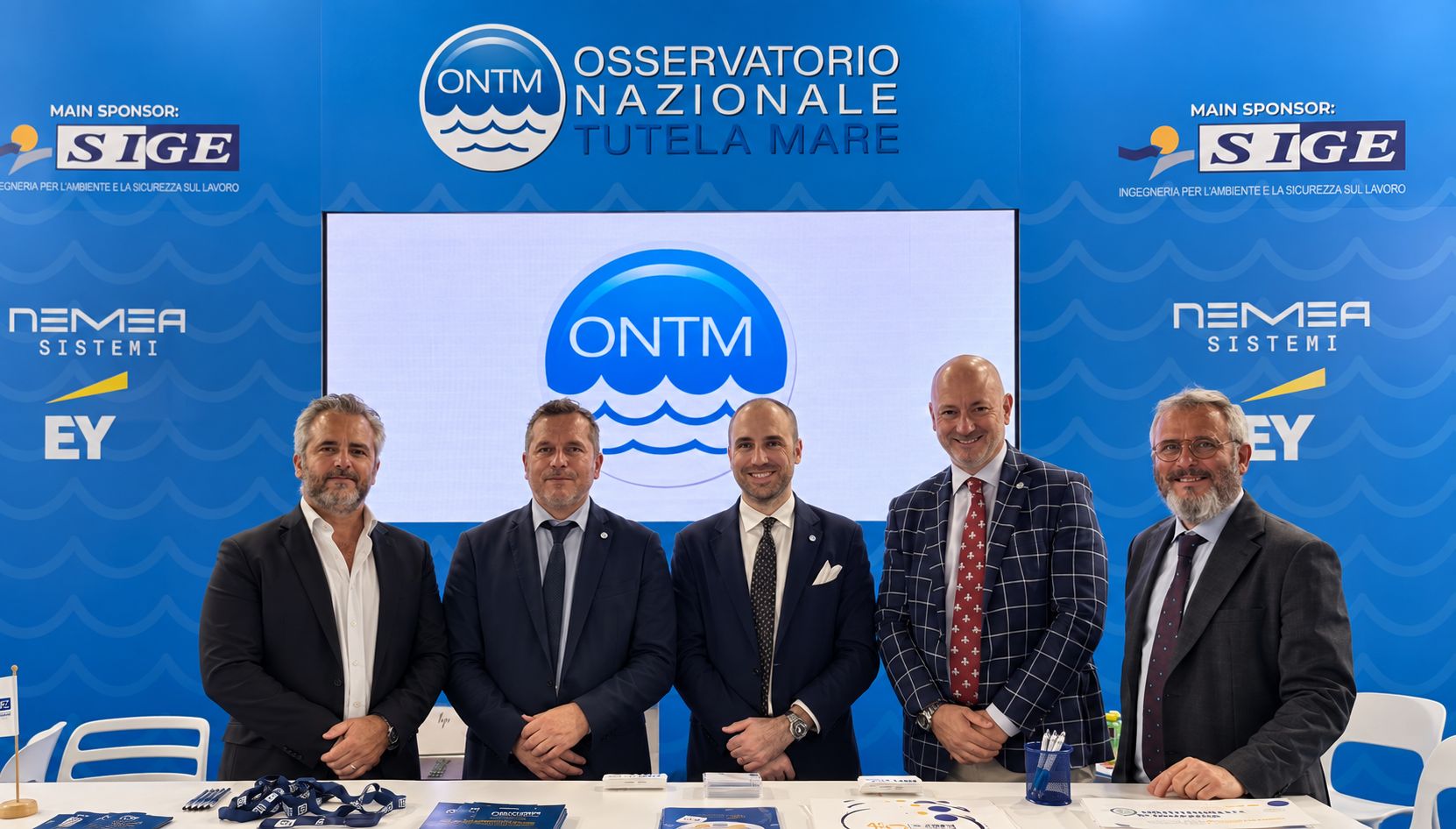
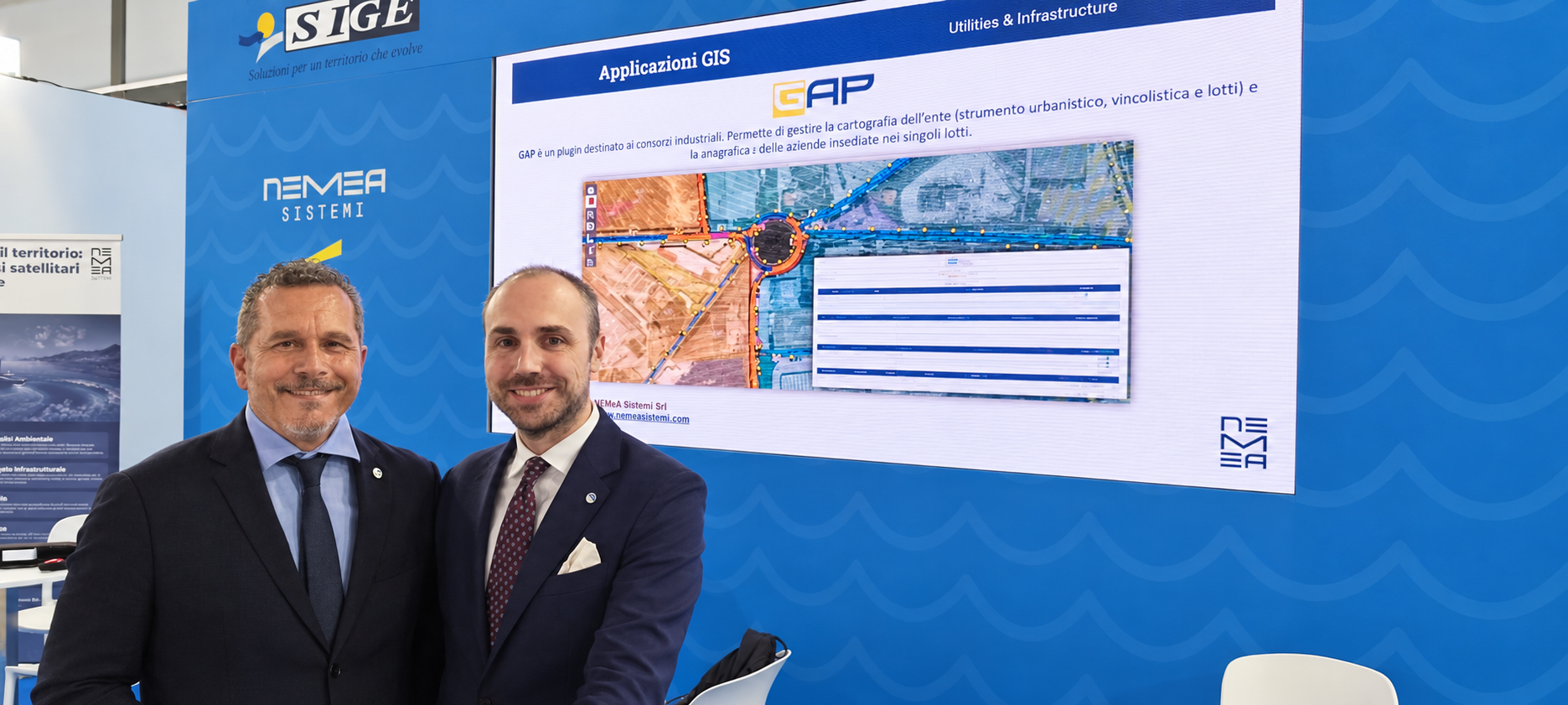
NeMeA Sistemi’s participation at the stand shared with ONTM – National Observatory for the Protection of the Sea, SIGE and EY, provided an opportunity to engage with industry professionals and explore in greater depth the role of advanced technologies in understanding and protecting ecosystems.
From observation to early warning
In this context, the CEO of NeMeA Sistemi outlined the evolution that, over the last three years, has led the company to gradually shift its focus from the simple collection of data to the development of systems capable of providing practical support to those who need to understand, plan, prevent and make decisions.
‘The value lies not in collecting more data, but in transforming diverse data – gathered from the sea, from space and from the land – into reliable and timely knowledge that improves decision-making’, emphasised Michele P. Boella.
This vision has taken shape through a number of projects: from SEASMA and EcoMonitoring, dedicated to the marine monitoring using distributed sensors and autonomous platforms such as the fully electric USV HYDRA®, to CaDiT, focusing on the Digital Twin of the coastal environment; from SENSE-MAP, which uses satellite data and interferometric techniques to measuring land subsidence, to 3xA®, aimed at converting SAR radar observations into layers of information that can be used in operational processes.
Different experiences that are coming together in the new EMAMI project, the NeMeA ecosystem for marine environmental monitoring. Multi-parameter buoys, robotic vehicles, IoT devices, Earth Observation data and GIS platforms all contribute to the creation of a comprehensive picture, in which theArtificial Intelligence It can help identify patterns, anomalies and priorities. The expected outcome is not a more comprehensive dashboard, but greater awareness for those responsible for making decisions.
The outlook is a shift from systems that describe what has happened to tools capable of promptly flagging conditions that warrant attention. This evolution requires integrated technologies and reliable, verifiable Artificial Intelligence: the company’s path towards ISO/IEC 42001 certification.
RemTech has thus confirmed that the green transition does not depend solely on the availability of advanced technologies, but on the ability to integrate them and to link together different skills, data and tools.
BEX 2026: when space technologies meet Earth
A few days later, the programme continued in Rimini with the first edition of BEX – Beyond Exploration Expo, the European platform created to forge links between the space sector and terrestrial industrial supply chains. BEX offered three days of exhibitions, conferences, workshops and professional meetings, demonstrating how the Space Economy extends far beyond exploration of space. Many technologies developed for space are already being applied in agriculture, energy, healthcare, transport, security and environmental protection.
Particular attention was paid to theEarth observation and to the satellite-based services. Images, multispectral indices and remote sensing systems can provide valuable information on land use, the condition of vegetation, water resources and the development of potentially critical events. The programme also explored the role of artificial intelligence, drones, robotics and autonomous systems: technologies that enable the correlation of large amounts of data, the detection of anomalies, the simulation of scenarios and the guidance of operational activities.
Among the topics discussed were the use of remote sensing for more sustainable agriculture, the relationship between energy and space-related activities, emergency management using satellite data and unmanned systems, and the technological similarities between space exploration and the deep-sea environment.
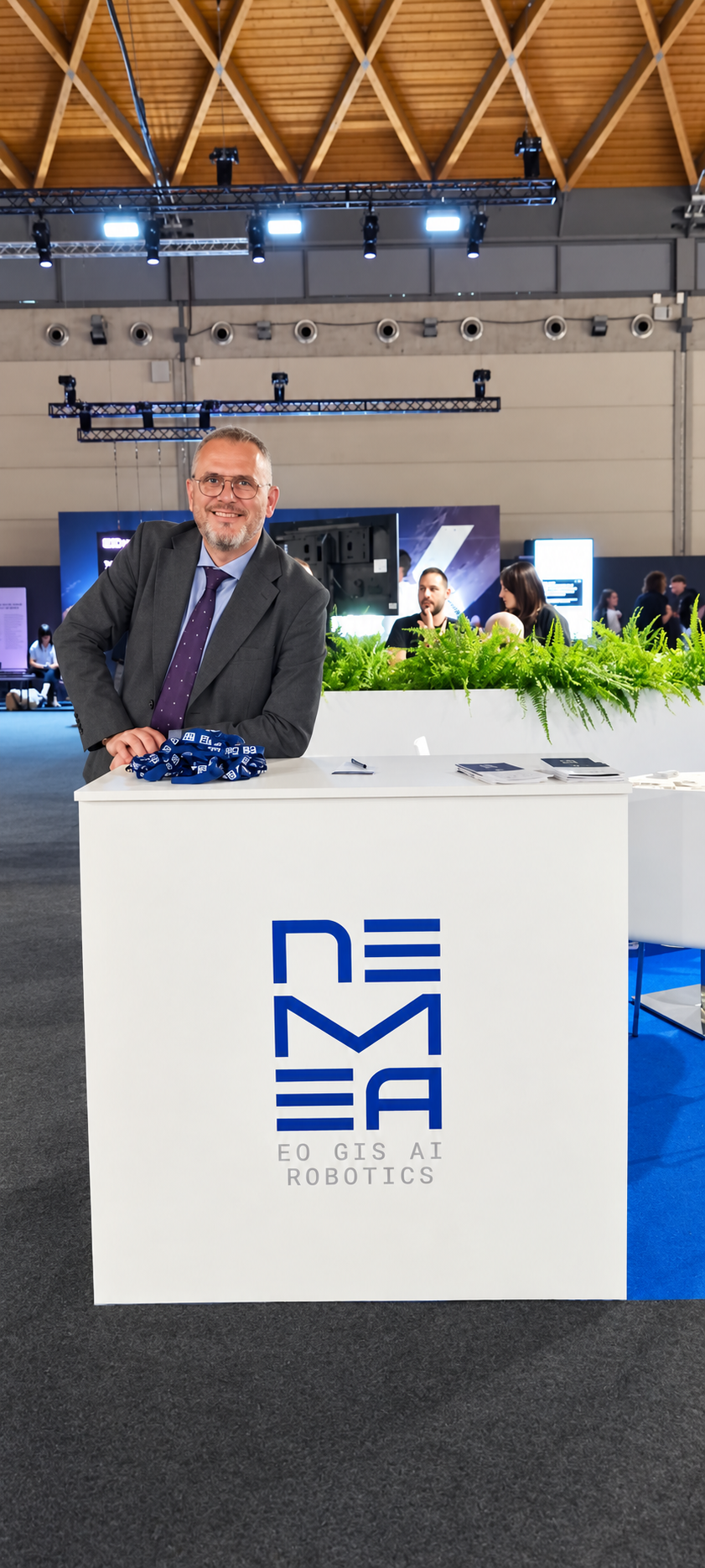
NeMeA Sistemi shared with AIAD – Federation of Italian Aerospace, Defence and Security Companies, of which it is a member, three days of exhibition stands dedicated to forging new synergies between businesses, institutions and research centres in the fields of space technologies and terrestrial applications. In particular, the meetings featured international buyers and institutional representatives from various parts of the world, who expressed an interest in NeMeA’s environmental monitoring solutions. From the needs of emerging countries to the ideas, suggestions and requirements gathered, the exchange has opened up new possibilities for development and collaboration.
RemTech Expo and BEX examined sustainability from complementary perspectives. In Ferrara, the discussion began with the needs of the local area and environmental regeneration. In Rimini, the focus broadened to include space technologies and their application to activities on Earth. The common ground lies in data. Its collection, integration and interpretation are essential for understanding the environment and taking effective action. Data, however, only generates value when it is transformed into accessible, contextualised information that is useful for decision-making.
It is at this stage that the NeMeA approach comes into play: linking observation, analysis and operational activities through integrated technological ecosystems capable of supporting monitoring, prevention and planning.
The two events confirmed a direction that is now clear: the ecological transition also depends on the ability to bring together different disciplines, technologies and supply chains. From Earth to space, and from space back to Earth, innovation becomes a practical tool for designing more resilient and sustainable systems.