Beyond the conclusion of the PNRR: a NeMeA Sistema-developed ecosystem based on cascading calls for proposals
The conclusion of the PNRR programme, within the context of innovation ecosystems and cascading calls for proposals, does not mark the end of a journey. On the contrary, it represents the most delicate and perhaps most important stage: the one in which the projects created thanks to these resources must demonstrate that they can become something more enduring than a single funded initiative. The point today is not merely to take stock of what has been achieved, but to understand how the wealth of expertise, relationships and vision built up over recent years can be consolidated over time.
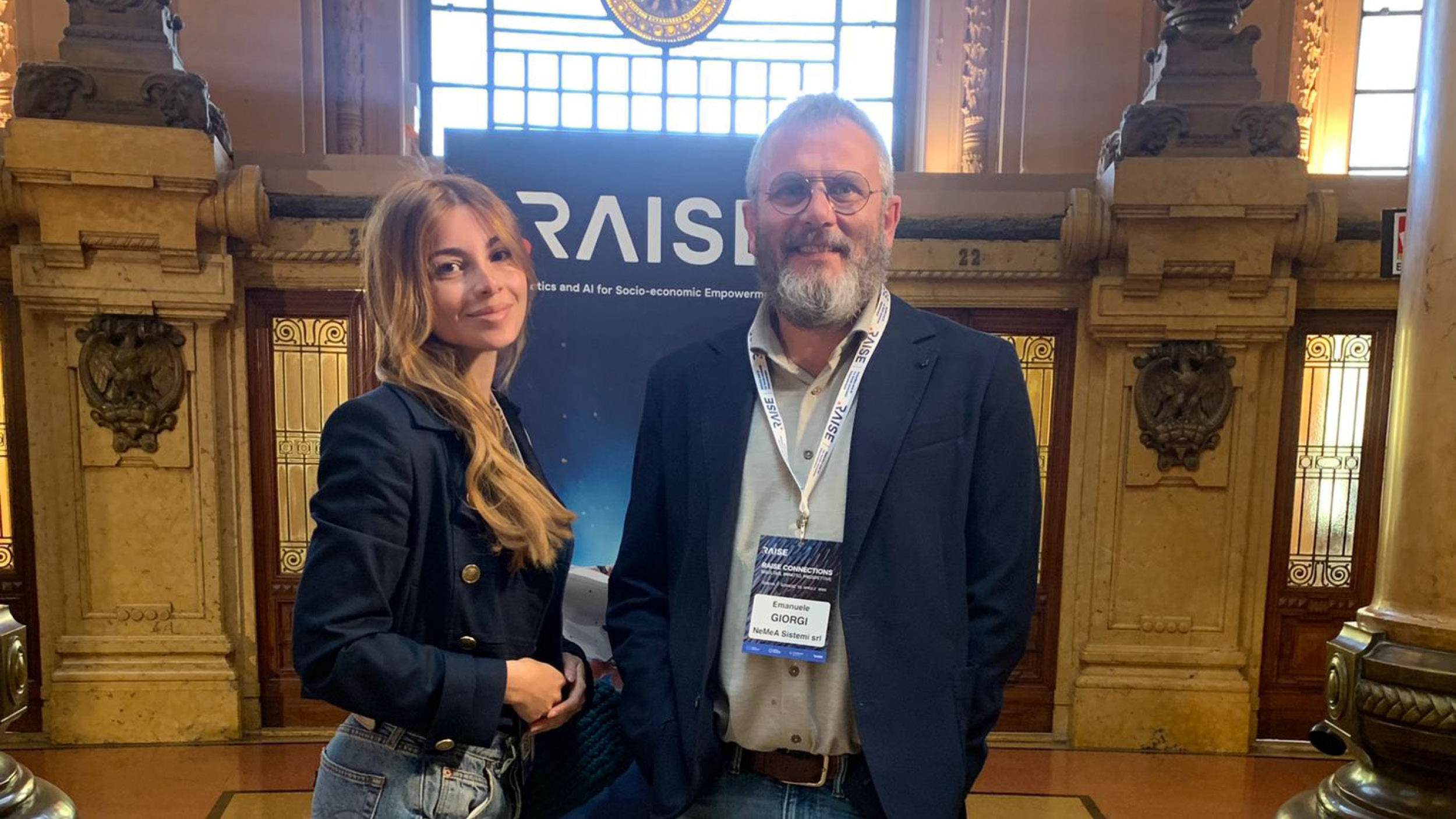
This is the underlying message that emerged in April 2026 from the series of events: “ONE HEALTH, ONE FUTURE”, organised by NBFC – National Biodiversity Future Centre and “RAISE Connections – Results, Impact, Outlook”, organised in Genoa by RAISE Liguria, as an opportunity for reflection, discussion and renewal.
Rather than a formal conclusion, the meetings conveyed the idea of an ecosystem which, having reached the end of the phase funded by the PNRR, is questioning its own ability to continue generating innovation, connections and impact even once these extraordinary resources are no longer available.
The true legacy of cascading calls for proposals: not just projects, but a lasting network
The most important value generated by this season cannot be measured solely in terms of figures, nor exclusively in terms of the scientific or technological achievements attained. The most significant legacy of the cascade calls for proposals is perhaps another: having contributed to building an ecosystem. In an Italian context often characterised by fragmentation, these measures have fostered interaction between research, business, institutions, local communities and technology transfer, creating tangible relationships and opening up avenues for collaboration that were previously less well-structured.
It is precisely here that the PNRR has demonstrated its greatest strategic significance. It has not merely supported ideas or accelerated individual initiatives, but has helped to create an innovative, all-Italian scientific and entrepreneurial network that is more cohesive, more aware of its own potential and better able to recognise itself as a system. A network that today conveys solidity and maturity, and which presents an image of Italian innovation not as a collection of isolated examples of excellence, but as a shared infrastructure, capable of generating value through collaboration.
The NeMeA case: different projects, a shared vision of applied innovation
In the case of ‘NeMeA Sistemi’, this transformation is particularly evident. The projects launched within the PNRR ecosystems demonstrate how the cascade funding model has succeeded in translating not only into research, but also into practical applications, technological synergies and new pathways for development.
As regards RAISE, were born ECOMONITORING+ and SPRING+, two projects that focus on the the relationship between technology, monitoring and sustainability in the marine and port sectors. On the NBFC, NeMeA has developed SEASMA and CADIT, further expanding its scope to include environmental monitoring and conservation of biodiversity. And furthermore, The project SENSE-MAP which focuses on monitoring of coastal erosion in collaboration with theRoma Tre University and theUniversity of Naples Federico II.
Taken together, these projects reveal much more than mere operational capability. They embody a vision: that of Italian innovation which successfully integrates digital technology, the environment, artificial intelligence, territorial monitoring and applied research, creating solutions that meet real needs whilst simultaneously strengthening the quality of the country’s scientific and entrepreneurial landscape.
From young people to the art of storytelling: the challenge now is continuity
Whilst the PNRR has had the merit of mobilising resources, projects and partnerships, the challenge that now lies ahead is even more ambitious: to ensure that this experience becomes a lasting reality. This means ensuring that what has been created is not confined to the duration of the funding, but has the prospect of consolidation, growth and recognition over time. And this applies as much to projects as it does to people.
One of the most significant aspects of this season is, in fact, the involvement of many young people, who have found within these ecosystems a tangible space for learning, experimentation and participation. In a labour market that often struggles to absorb new skills and open up credible career paths, this element has a value that goes beyond the individual project: it shows that innovation can also become a tool for social and economic empowerment, capable of generating new opportunities, new start-ups, new professional roles and a renewed sense of confidence in the future. In this sense, young people are not merely the recipients of the transformations taking place, but an integral part of their success: they bring value to businesses, help to renew their language and approaches, and also strengthen Italy’s position as a technologically credible and competitive nation.
But alongside operational continuity, there is another crucial challenge: that of storytelling. Because what has been built up over recent years must be communicated in the right context. It is not enough simply to list the figures, results, partners or milestones achieved. We need to convey the significance of what this experience has generated: a robust entrepreneurial and scientific ecosystem, a capacity for networking that cannot be taken for granted, and a cohesive sense of Italian identity within the research and technology sector. Telling this story well means giving weight not only to what has been achieved, but also to what this model can still become.
An Italian model to be taken to Europe
And this is perhaps the most interesting point of all. The real achievement of the PNRR season is not merely that it has funded valuable projects, but that it has highlighted a possibility: that of an Italy capable of presenting itself on the European stage not as a fragmented system, but as a recognisable, mature and collaborative network.
If it can consolidate the progress made, ensure the continuity of its projects, retain and nurture young people, and, above all, clearly articulate its model, this ecosystem can truly aspire to become a benchmark. Not only for the scientific and technological achievements it has attained, but for the quality of the structure it has managed to create: a structure in which business, research, local communities and innovation do not operate in isolation, but as parts of a single vision.
This, perhaps, is the most important challenge left as a legacy by the PNRR: to demonstrate that what has been achieved was not a one-off, but the potential beginning of a new vision for the Italian innovation system.