NeMeA Sistemi: this is where research takes place, bringing together those who study the local area and those who look after it
One quay to be electrified and one lagoon to be monitored These seem like distant problems. Yet, in both cases, in order to decide where to take action, we must first understand what is changing and how we can demonstrate this. Between October and November, we came across this question on five separate occasions, from the international comparison of ports to an audience of students in Olbia.
‘Maritime and Port Development’: understanding ports to guide their transformation
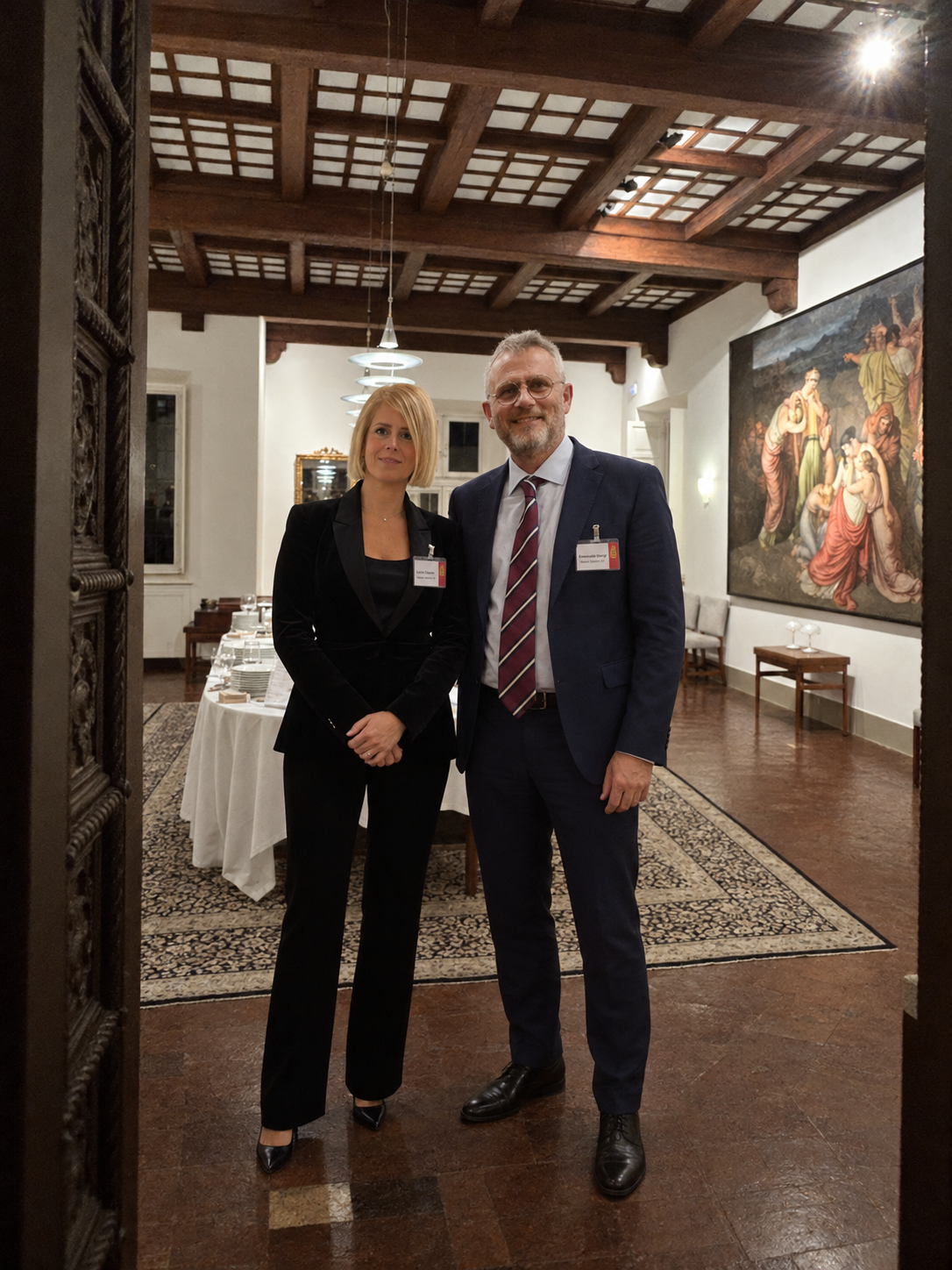
On 22 October, at the residence of the Danish Ambassador in Rome, NeMeA took part in the Rome leg of the ‘Delegation to Italy on Maritime and Port Development’. Italian and Danish institutions and businesses discussed the electrification of quays, new fuels, infrastructure security and environmental monitoring.
For those who manage a port, understanding these changes requires piecing together information gathered in various ways. The satellite observations provide an overview, the sensors collect measurements at specific points and the geographic information systems (GIS) enable them to be linked to the locations where they were recorded. This is where NeMeA’s work comes into its own. With observations that can be compared over time, it becomes easier to identify where action is needed and to check what has changed following an intervention.
‘Interregional Innovation Investments’: the bridge between research and the market
On 28 October, NeMeA attended the meeting in Rome organised by the Lazio Region with EISMEA, the Executive Agency of the European Council for Innovation and SMEs. The discussion took stock of the early years of the European instrument Interregional Innovation Investments, on the difficulties that have arisen and the prospects for planning beyond 2027.
Funded by the European Regional Development Fund, the programme supports investment projects across regions with compatible innovation priorities. The aim is to help technologies that have already been demonstrated – at TRL 6 or 7 – to reach TRL 8 and 9, the levels corresponding to systems that are qualified or proven under operational conditions. This is the stage at which businesses, universities and research centres can pool their expertise and resources to transform an experimental result into a usable solution.
‘AI is here’ and the business testbed
On 6 November, at Villa Mimosa in Sassari, the ‘C’è l’AI’ workshop began with a practical case study. The event, organised by the Information Technology Section of Confindustria Central and Northern Sardinia in collaboration with NeMeA Sistemi, it explored how artificial intelligence can support businesses in their work, from information gathering to business analysis and the preparation of reports. Leading the initiative is Michele Boella, chair of the IT Section and CEO of NeMeA.
One case study came from the local area itself. In the geoportal of the Sassari Provincial Industrial Consortium, developed by NeMeA, the map of production areas It can be consulted alongside the information on the Business Section. This means that anyone planning an intervention can see where the settlements are located and consult data on the organisations operating there. The quality and organisation of that information form the starting point for any subsequent analysis.
‘Space&Blue’: the sea can also be studied from space
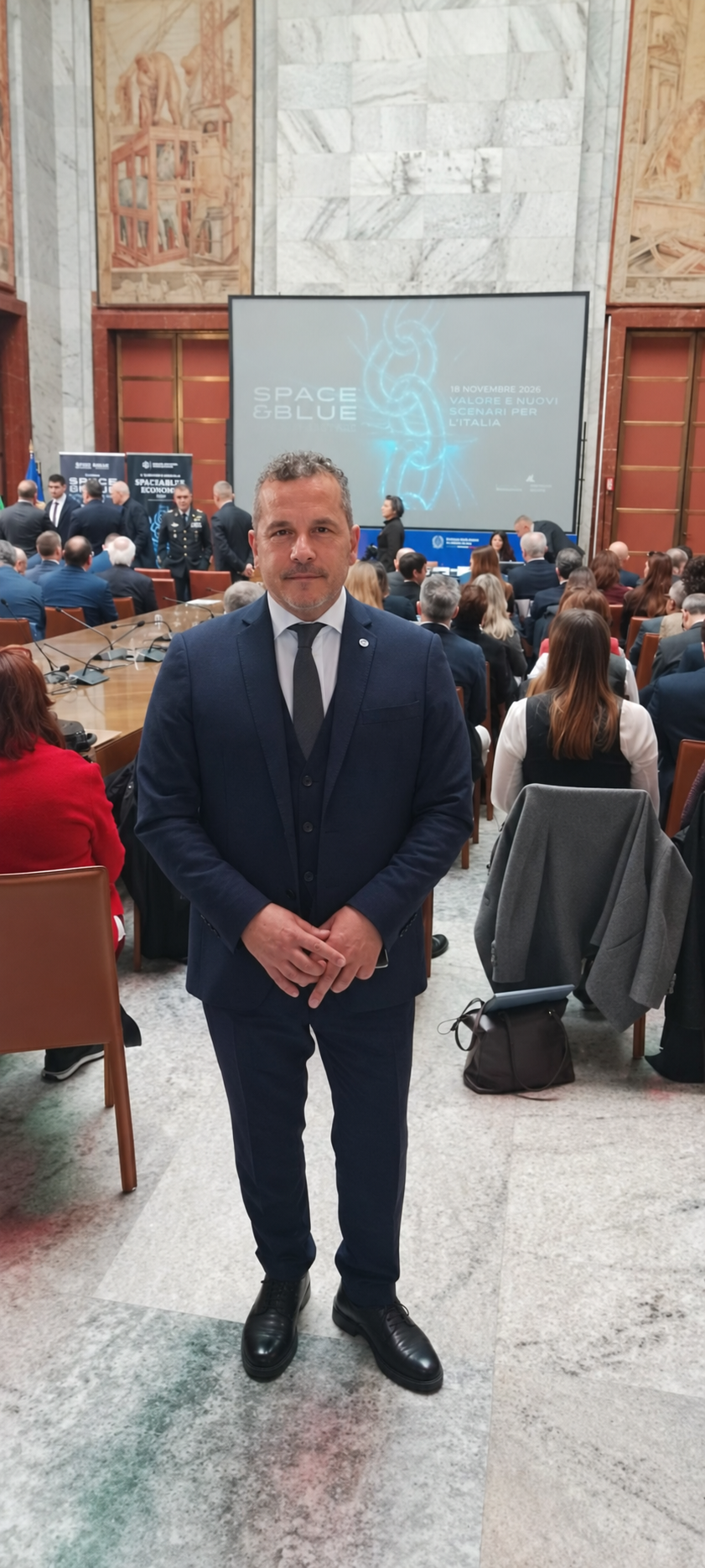
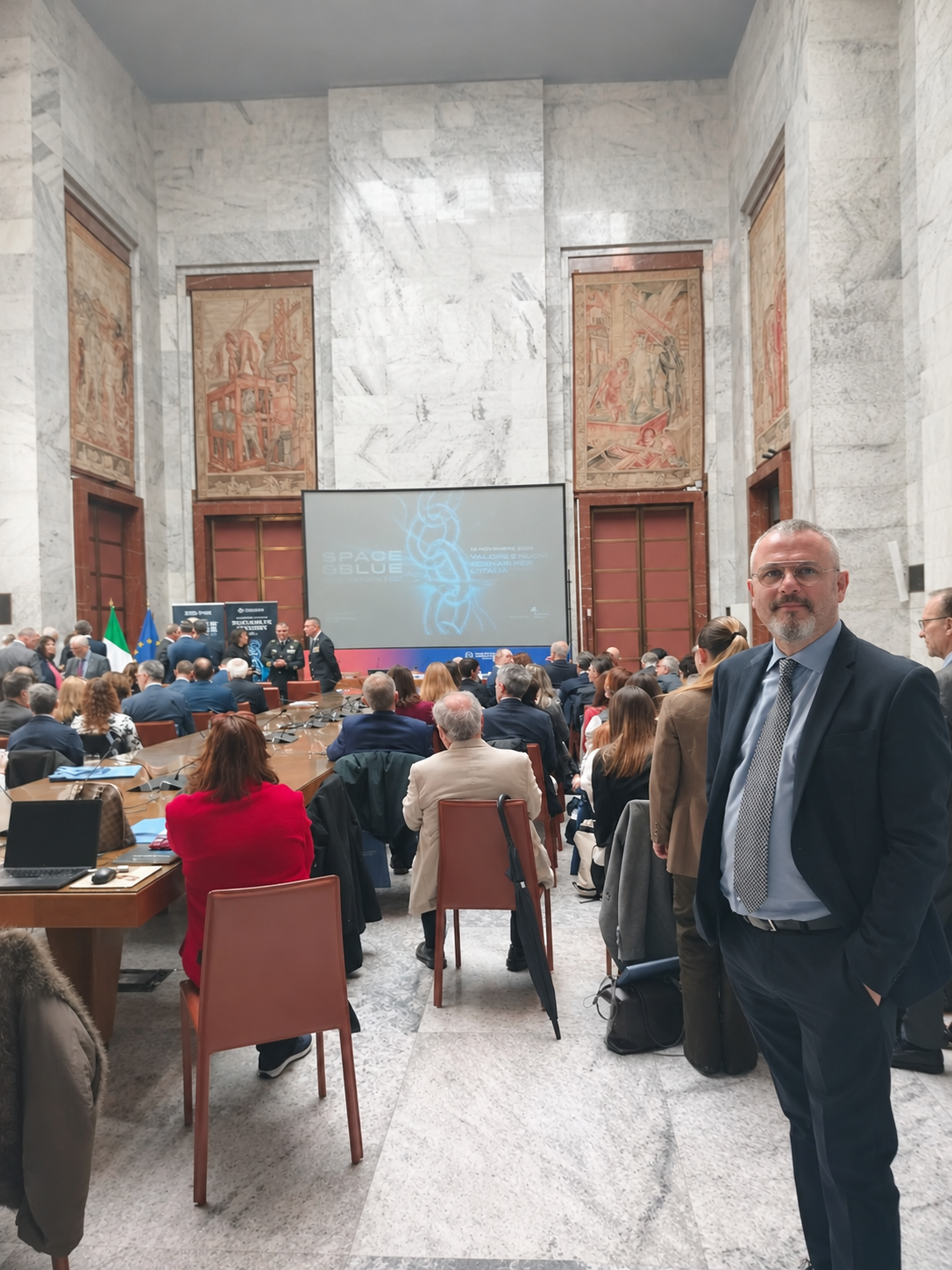
A measurement taken in water tells us what is happening at a specific point. A satellite observation helps to place that measurement within a wider area. This is an example of how expertise from different sectors can be applied to the same problem. On 18 November, at the Ministry of Enterprise and Made in Italy, the fourth Space&Blue Forum has brought this report to a national level. At the heart of the programme is the first Space&Blue National Report, which focuses on the economic contribution of the space and maritime sectors and on opportunities for integration, including within the diving sector.
For NeMeA, this is a dialogue that has already taken place in Sardinia. In June, NeMeA organised an event in Olbia, together with theNational Observatory for the Protection of the Sea, the ‘Space & Blue Forum Sardinia 2030'. One of the questions raised during that discussion was very specific. How can we combine satellite observations and in-situ measurements to gain a better understanding of the marine ecosystems and provide those responsible for managing the coastlines with a common basis on which to work?
‘Science in the Square’: research begins with a question
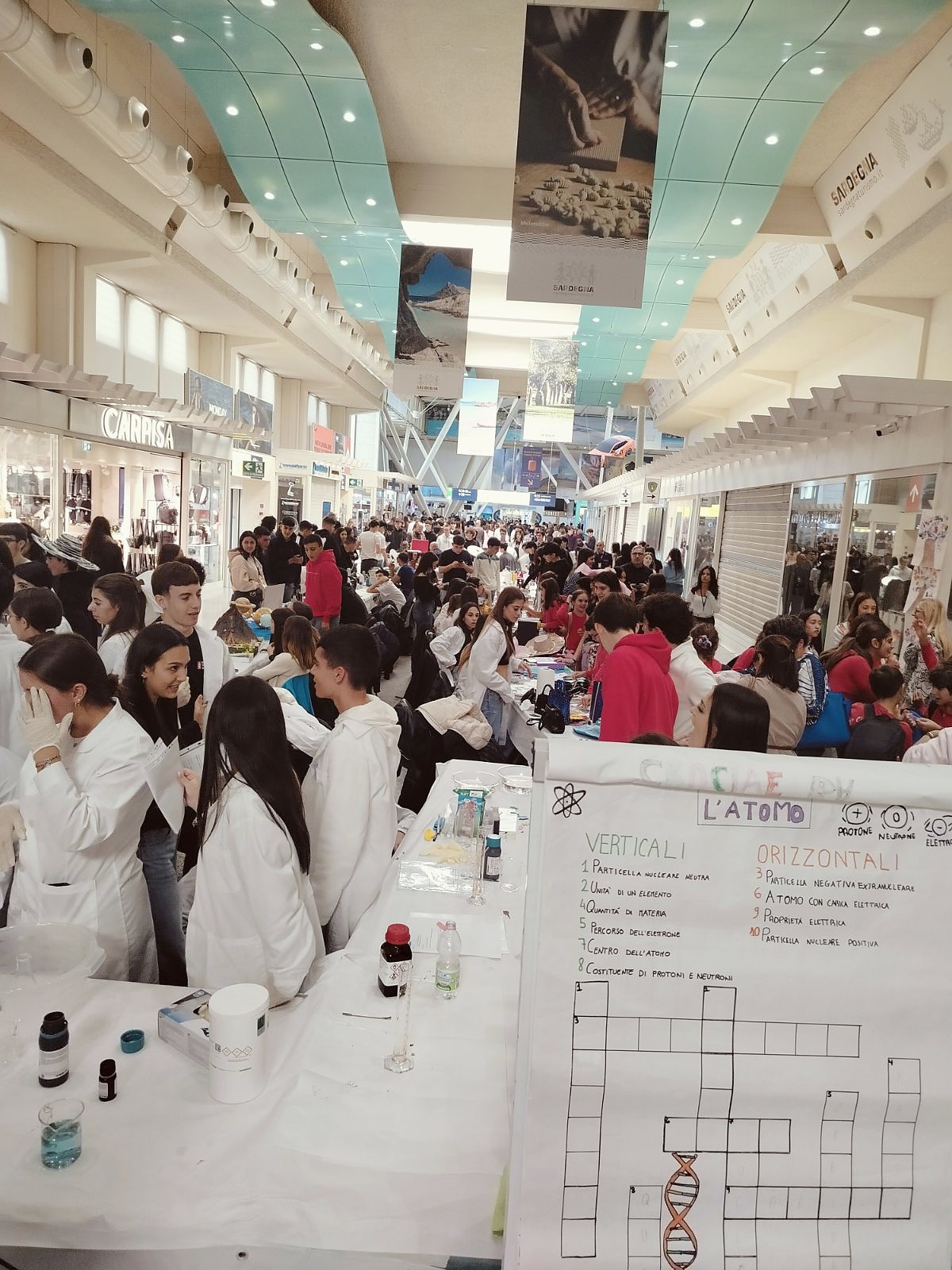
On 18 and 19 November, at Olbia Costa Smeralda Airport, science took centre stage through the students’ experiments, questions and laboratory work. On the second day of Science in the Square 2026, NeMeA’s contribution was entrusted to Michele Boella, who gave a talk entitled ‘Eco-robotics and Digital Twin: ‘From data collection to decision-making’.
An example of NeMeA’s work helps to illustrate the issue. In the Calich lagoon, in Alghero, the research project AI4Nature, developed in collaboration with the Porto Conte Park, combines data collected from HYDRA® aquatic drones and sensors combined with satellite observations. The aim is to build a digital twin of the lagoon, a data-driven model that helps us study its evolution. Sharing this work with students also means sharing the questions that form its basis. What is worth measuring? And what observations are needed to verify the model’s outputs?
The next stage in the Chamber of Deputies
The relationship between scientific knowledge and practical decisions will be the subject of further discussion on 16 December, at the prestigious venue of the Chamber of Deputies, where, together with the National Observatory for the Protection of the Sea (ONTM), NeMeA will present a position paper on the future of Italian ports. The proposal looks towards a blue economy in which satellite data, sensors and environmental monitoring can support more informed decision-making, combining the efficiency of port operations, marine conservation and infrastructure security.
From one meeting to the next, the issues change, as do the people with whom we tackle them. This is also how a question raised within the local community can become an exercise we undertake together, and how the outcome of that exercise can be fed back to those who look after that community. It is a process that continues after the meetings, when we come together to reflect on what we have learnt and what is still worth exploring.